
Bookworm: Bruce Pascoe and Bill Gammage
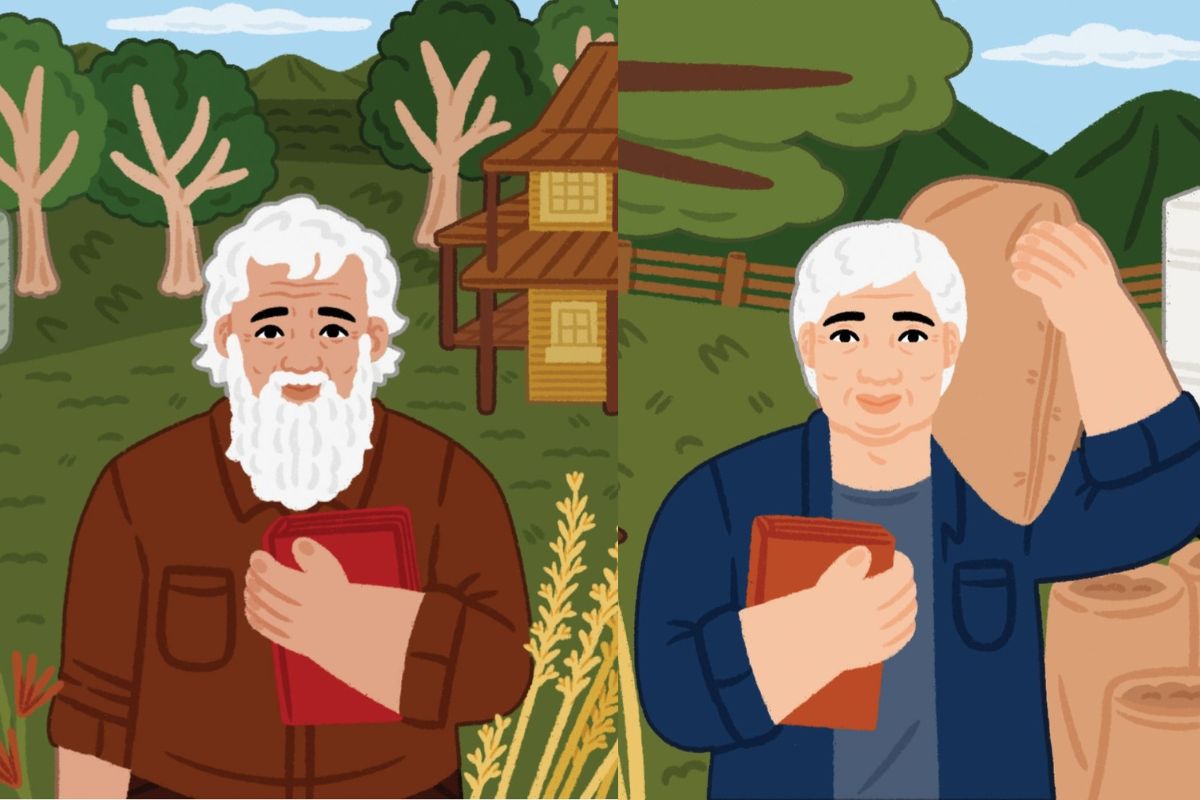
In our interview series Bookworm, we chat with authors and artists about books, gardening and food. This month, we meet Bruce Pascoe and Bill Gammage.
Bruce Pascoe is a Yuin, Bunurong and Tasmanian man, farmer and award-winning writer. Through his work, including the esteemed Dark Emu, he has reshaped public understanding of Aboriginal history, education, and land management practices.
Bill Gammage is an historian and author, best known for The Broken Years and The Biggest Estate on Earth, works that transformed understanding of World War I and Aboriginal land management.
In their new book Caring for Country, they explore how we can better care for the environment by drawing on practices used by Aboriginal and Torres Strait Islander Peoples.
They answered our questions about Country, growing native plants, and respectful ways educators can include Aboriginal and Torres Strait Islander perspectives in their teaching.

In your own words, how do you define Country?
Bill Gammage: Narrowly defined, Country indicates how a person or a group relate to an area of land spiritually and geographically, via ancestry, family and association. It can also apply to animals and plants, indicating their preferred and appropriate habitats.
Bruce Pascoe: She is everything; the birds, animals, insects, plants, water, air. She speaks to you when a light wind creeps through you window at night to fan your face.
Which plant brings you the most joy at this time of year and why?
BP: Pittosporum. The flowers exhale sweet perfume. It’s a plant of love.
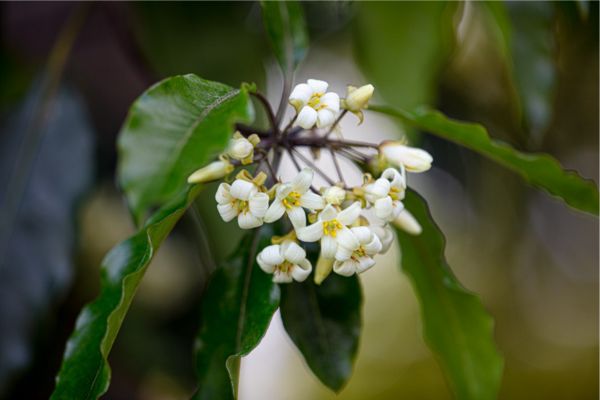
Pittosporum undulatum flowers (Credit: Saahmad Bulbul CC BY-SA 4.0)
Our Kitchen Garden Program teaches children about pesticide free gardening practices and permaculture basics like companion planting. Can you explain fire plants and how they can also be great companion plants?
BP: Australian plants have a relationship with the cool fire Aboriginal people used to shape the forest. Many of our fruiting plants have a particular tree they like to grow beside. Have a look in the bush and see if you can see relationships.
Bruce, can you tell us about the variety of grasses, root vegetables and other Aboriginal food you’re growing on your farm?
BP: We grow kangaroo grass, spear grass, microlaena, windmill grass and some others. We turn the seed into flour. They are all perennial grasses. The plants can grow for as many as 120 years. They sequester carbon.
The tubers are also perennial and have delicious roots which can be harvested three to four times a year. Once again they are perennial and therefore by not ploughing, and by leaving the plants in the ground they sequester carbon. We lift the plants so that we can harvest the young tubers and then push the mother plant back into the soil. The plants love this because they have adapted to it as Aboriginal people harvested in this fashion for perhaps 100,000 years.

A sneak peak of Caring for Country
First Nations foods are popular to grow and cook in many of our school gardens. What are some ways educators can include Aboriginal and Torres Strait Islander Peoples as part of responsible cultural recovery?
BG: Recognise Aboriginal copyright in their knowledge. Ask Aboriginal elders to help teach in school gardens, and to explain why native plants flourish and how they were/are used.
BP: Talk about the advantage of perennial grains and tubers. Grow vanilla lily, wruk djuang, harvest some clean white tubers and taste them raw. Now cut some into discs and combine them in a dumpling mix. The new Australian cuisine!
What are some key learnings children can take away from Caring to Country to care for their school kitchen garden?
BG: Learn what a plant wants (water, nutrient, light, space, soil, temperature etc). Help it get these wants. Make sure that it is happy with or benefits from its companions.
BP: Watch your plants, spend time with them. Learn their expressions for when they are flourishing and when they are struggling. Help them. Learn what they need. Look after them like family because that's who they are.

A sneak peak of Caring for Country
Aboriginal Peoples were the world’s first bakers. What are some of the plants and techniques used?
BP: We make flour from the grasses I mentioned above but it can also be made from water lily roots, pandanus seeds (need to be leached) and bunya nuts. Have a look at Black Duck Foods website to see some of our flour and baking instructions.
Finally, after reading your book, what are some actions children and young people can take if they have ideas to save their environment?
BG: Think how to prevent wrong fire rather than fighting it. Manage plants to suit (by planting/not planting, timely burning etc). Make sure that there are plants to help native birds, reptiles. insects and animals. Learn your Country.
BP: First learn the history of the country, the whole history. This will teach you that humans are capable of peace with prosperity. Don't believe those who tell us war is the natural condition of man. Then love your country in peace. Think twice before destroying any tree, think thrice before abusing your fellow humans. Urge industry to find a way of doing without plastic. Use free power, the sun.
Find Caring for Country online and at your local bookshop.
Want to keep learning? Kitchen Garden Program members have access to many First Nations resources on the Shared Table, including:
-
A First Nations ingredients recipe collection, flavour wheel, and handy Growing & Harvesting First Nations Foods guide.
-
Ten First Nations food swaps webinar with Warndu co-founder Rebecca Sullivan.
-
A cook-along webinar with Nornie Bero of her mushroom ravioli with wattleseed, pepperberry and saltbush.
< Back to Latest News