
Young voices shaping school food
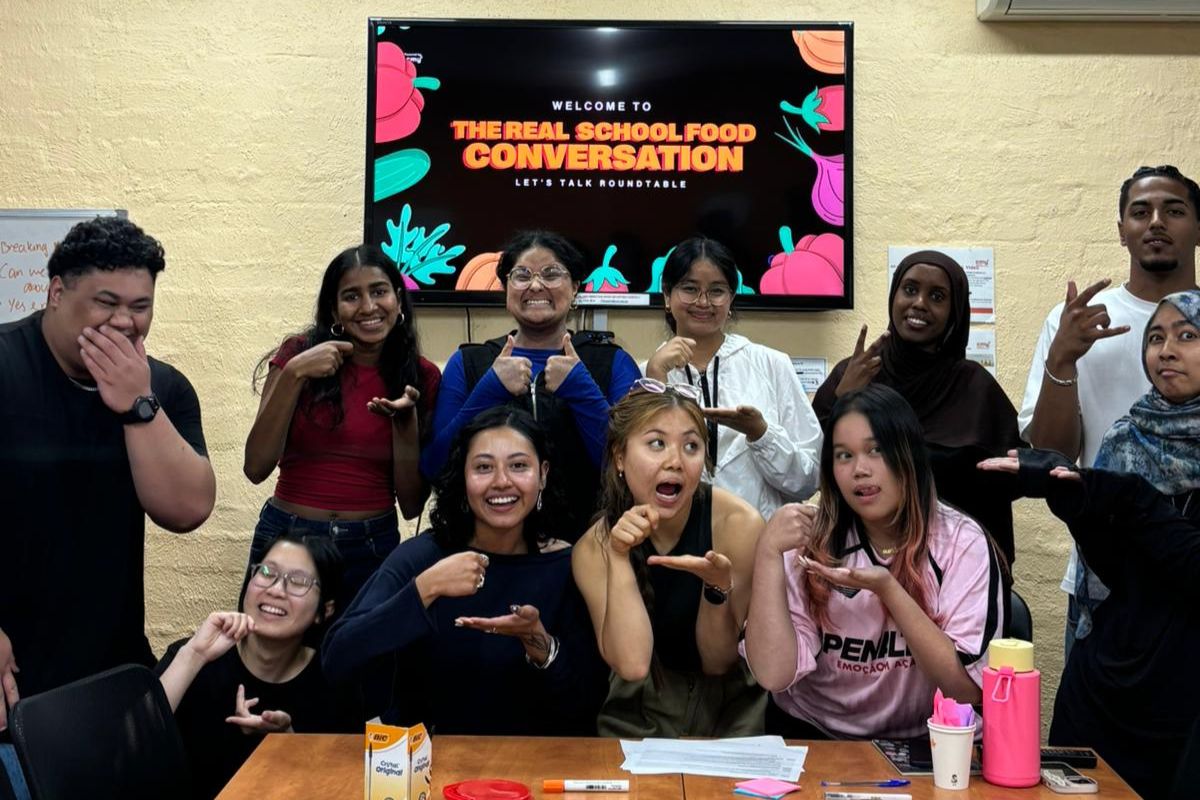
In the lead-up to Harmony Week, we came together with Culture Spring, powered by the Centre for Multicultural Youth, to hear from a group of young people about their school food experiences. The group of Malay, Indian, Chinese, Vietnamese, Indonesian and Samoan youth shared perspectives, recipes and ideas to centre culture and belonging in the school food system.
The impact of the Kitchen Garden Program
One of the participants, Teresa, who used to participate in the Kitchen Garden Program at her school, described the lasting impact it had on her.
“[Our school] had a garden, some herbs, lavender and a compost bin. It was really nice being able to cook with our friends and teachers, and just to try a variety of different dishes.
It was the first time I had dishes like risotto or pumpkin gnocchi. And that was mind-blowing, because I had never had it before. And that was one of the experiences that made me more willing to try food from other cuisines.”
School-friendly dishes from around the world
Because the Kitchen Garden Program strives to reflect the cultures and tastes of the students it serves, we asked the group of young people to share the foods they love and would like to see prepared in schools.
Aeri, who hails from Jakarta, says that Indonesia’s national dish, nasi goreng, is ideal for school kitchens: “It's so easy to make. Just grab some rice, sweet soy sauce, soy sauce, some veggies, eggs, and meat (if you're not a vegetarian). Kids and young people love it!"
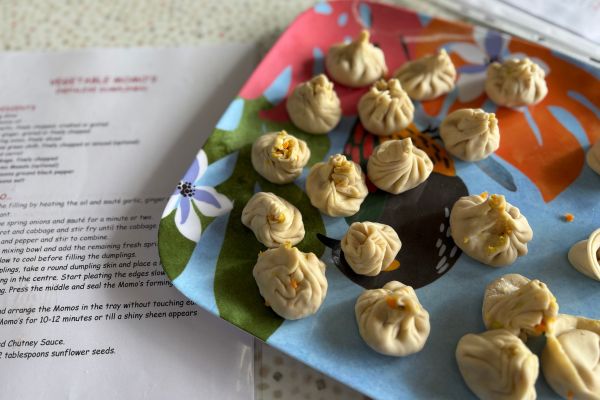
Wendouree Primary School students love making momos.
For Joy, coconut curry with rice is a favourite, and Nepalese momos stand out as a meaningful and adaptable dish: “The filling can be meat, like chicken mince, but they can also be made vegetarian. As a child, I'd go to my friend's house, and all the women would get together and make momos and talk in the kitchen while the kids played together.”
Rishika recommends besan chilla, a chickpea flour pancake that’s easy to make and naturally gluten-free: “You can add any spices you want. I normally have salt, chilli powder and garlic powder. And then you mix the flour and spices with water, and you make a thin batter. You can add vegetables too. I normally just put onion, but you can also put grated carrots and other grated vegetables. It’s really filling as well as healthy.”
Harman grew up eating a mix of Indian and Western cuisines. “I think vegetarian food is big in our culture, and that comes also from a religious influence because I'm Sikh. Even though there's no scripture that prevents us from eating certain kinds of meat, we acknowledge that we live with Muslims and we live with Hindus so we tend to stay away from beef and pork completely,” he says.
He suggests making potatoes shine by jazzing them up with spices, chutneys and sauces. Think aloo gobi or vada pav. For something sweet, he recommends kheer, a vermicelli or rice pudding topped with nuts and dried fruit.
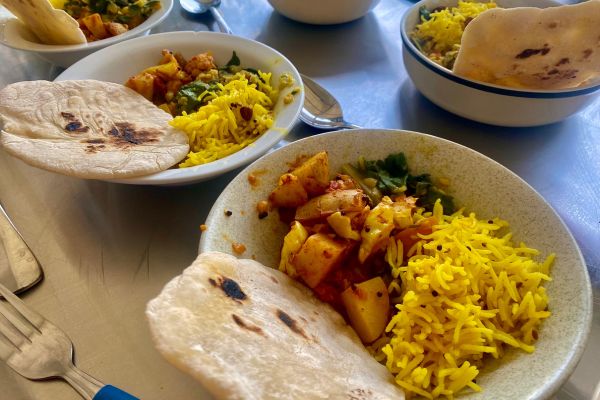
At Moruya Public School, students prepared aloo gobi, dahl, flat breads, coconut ladoo, yellow rice and papadums.
Zhaakirah recommends Malaysia’s national dish, nasi lemak, a fragrant rice cooked in coconut milk and pandan leaves, served with a side of sambal, eggs cucumber and dried anchovies. She shares a simple tip for boosting flavour: “Before you throw out the coconut cream in the tin, just put some water and shake it to put some more flavor into rice.”
Learning to love chilli
Zhaakirah also offered ideas on how to expand children’s palates by trying new, spicy flavours. She recommends starting slowly with sambal belachan: “It's like a very thick chili paste, sweet and spicy. And we always have it with rice, or maybe noodles.”
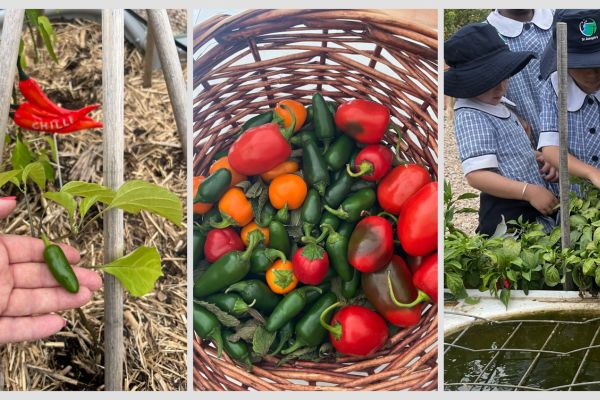
Several types of chillies are grown at St Joseph's Catholic Primary School (Werribee) .
Aeri wasn’t naturally a fan of chilli, but she learned to like it so she could enjoy a West Sumatran dish, close to her family: dendeng balado.
“It’s basically beef jerky, and you have some tomatoes and chili. I cannot stand spice, but that is the first dish that genuinely kick-started a change in my whole palette, which made me be able to eat spicy food, because it meant so much to me,” she says.
Growing culture beyond the plate
Food culture doesn’t stop in the kitchen. We also asked the group about the home-grown produce that matters to them and suggestions on fresh ingredients that Kitchen Garden Program members could try growing in their school food environment.
Zephaniah recommends growing taro, which is highly versatile and can be planted year-round in tropical Australia: “You can use the whole plant, whether it’s the roots or the leaves. You can make taro chips, roast the whole thing like a potato, or chop the leaves and cook them with coconut.”
Even with only a balcony, Rishika’s family managed to grow food at home, the perfect inspiration for schools with limited space. “We used to grow okra, tomatoes, basil and green chillies. We lived in an apartment, and didn’t have a proper garden, so we’d just grow them in pots.”
And for Josna, her family grows a small curry leaf tree, allowing them to pick fresh leaves whenever they cook.
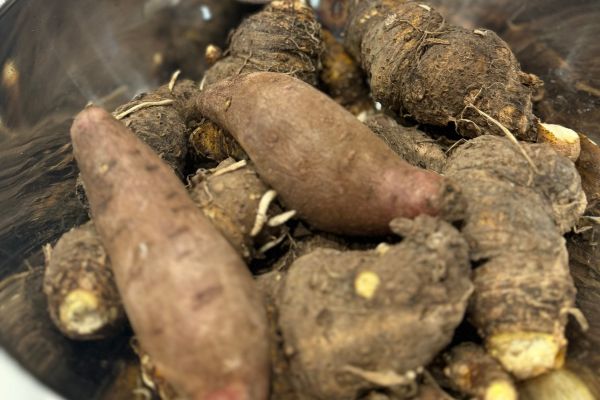
The children of Little Lane Early Learning Box Hill digged up taro and sweet potatoes from their garden.
Thank you to the Centre for Multicultural Youth for facilitating such a fun deep-dive with a group of passionate young people who generously shared their school food experiences with us and perspectives on growing, harvesting, preparing and sharing food at school.
For more cooking inspiration, Kitchen Garden Program members can find more than 500 recipes on the Shared Table, our online resource library and community hub.

This story was developed with the Centre for Multicultural Youth to support our VicHealth partnership. The Stephanie Alexander Kitchen Garden Foundation has partnered with VicHealth to ensure more young Victorians can develop lifelong skills and confidence in cooking and gardening through preventative, positive food education and the Kitchen Garden Program.
< Back to Latest News